
Solar STCs and battery STCs explained
How the federal certificates behind solar and battery rebates work, how they're calculated, and what changes on 1 January 2027.
 Top Power Electrical team · 6 min read
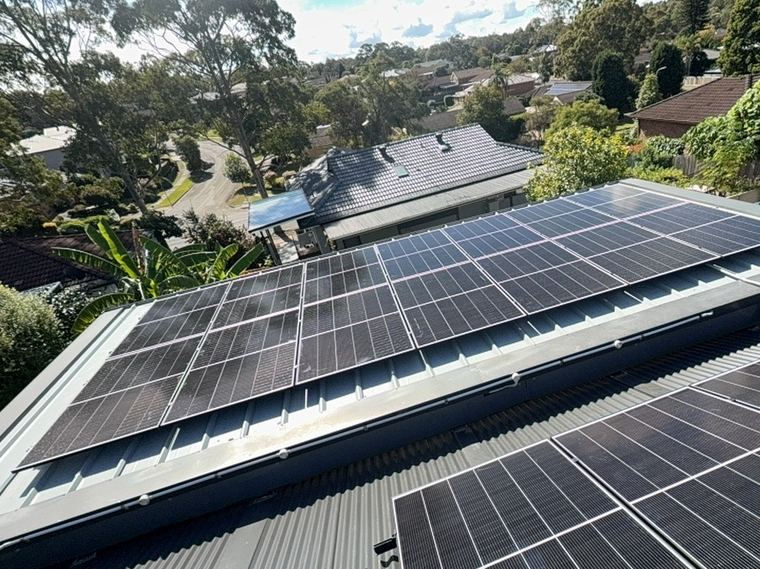
When someone talks about the "solar rebate" or the "battery rebate", they almost always mean STCs. It isn't a cheque from the government. It's a certificate your system creates, which your installer usually buys from you by taking its value off the quote.
What is an STC?
A small-scale technology certificate (STC) is created under the federal Small-scale Renewable Energy Scheme (SRES), run by the Clean Energy Regulator. Electricity retailers have to buy STCs each year, which gives them a market value. Since 1 July 2025 batteries can create STCs too, through the Cheaper Home Batteries Program.
You can assign your STCs to your installer for an upfront discount (the usual way), or keep them and sell them yourself through the REC Registry. If you sell them yourself, you don't get the upfront discount.
What's an STC worth?
We use about $37 per STC, which is roughly what certificates trade for on the open market, where most installers sell them. (The government STC Clearing House has a fixed $40 ex GST price, but sales there can take a long time.)
How solar STCs are calculated
For a home solar system (under 100 kW), the formula is:
System size (kW) × zone rating × deeming years, rounded down.
- Zone rating: depends on your postcode. Most of the areas we cover in NSW are Zone 3 (rating 1.382). Check your postcode on the Clean Energy Regulator's site.
- Deeming years: the number of years left in the scheme, which ends in 2030. Systems installed in 2026 get 5 years, and systems installed in 2027 get 4.
Example: a 6.6 kW system in a Zone 3 postcode installed in 2026 gets 6.6 × 1.382 × 5 = 45 STCs (about $1,665 at $37). Installed in 2027 it gets 36 STCs (about $1,330). A 10 kW system drops from 69 STCs to 55.
How battery STCs are calculated
Battery STCs are based on the battery's usable capacity and the STC factor in place on the installation date. Since 1 May 2026, the factor tapers with size:
- Up to 14 kWh: 100% of the STC factor
- Over 14 kWh up to 28 kWh: 60%
- Over 28 kWh up to 50 kWh: 15%
- Over 50 kWh: no extra STCs (batteries up to 100 kWh can still claim on the first 50 kWh)
STC factor by installation date
| Installed | STC factor per kWh |
|---|---|
| 1 May to 31 Dec 2026 | 6.8 |
| 1 Jan to 30 Jun 2027 | 5.7 |
| 1 Jul to 31 Dec 2027 | 5.2 |
| Jan to Jun 2028 | 4.6 |
| Jul to Dec 2028 | 4.1 |
| 2029 | 3.6, then 3.1 |
| 2030 | 2.6, then 2.1 |
Worked examples (usable capacity)
| Battery | Installed by 31 Dec 2026 | Installed Jan to Jun 2027 |
|---|---|---|
| 5 kWh | 34 STCs (~$1,260) | 28 STCs (~$1,040) |
| 14 kWh | 95 STCs (~$3,520) | 79 STCs (~$2,920) |
| 27 kWh | 148 STCs (~$5,480) | 124 STCs (~$4,590) |
Dollar figures use about $37 per STC and are estimates of the certificate value only, not a system price. The actual discount depends on the STC price your installer gets and the battery's usable capacity on the Clean Energy Council list.
See what you could get back
Our rebate calculator estimates your federal battery and solar STCs in under a minute. Then our own electricians can quote the system that suits your home.
What changes on 1 January 2027?
- Batteries: the STC factor drops from 6.8 to 5.7, about 16% fewer battery STCs. It drops again to 5.2 on 1 July 2027.
- Solar: deeming years drop from 5 to 4, so about 20% fewer solar STCs.
What counts is the date the system is installed, not when you sign a contract or pay a deposit. If you're aiming to beat the step-down, leave time for approvals and scheduling.
Who qualifies for battery STCs?
- The battery must be on the Clean Energy Council's approved list, be 5 to 100 kWh nominal capacity and be installed with new or existing solar.
- It must be installed by a Solar Accreditation Australia (SAA) accredited installer.
- It must be VPP-capable, though you don't have to join a VPP.
Frequently asked questions
Do I have to do anything to claim STCs?
Usually not. Most people assign their STCs to the installer, who takes the value off the quote and handles the paperwork with the Clean Energy Regulator.
Is the battery rebate based on nominal or usable capacity?
Usable capacity. That's the energy the battery can actually deliver, which is usually a bit less than the nameplate figure.
If I sign before 31 December but install in January, which rate applies?
The January 2027 rate. STCs are based on the installation date, not the contract date.
Why do big batteries get less per kWh?
Since 1 May 2026, capacity over 14 kWh gets 60% of the factor and capacity over 28 kWh gets 15%, to keep the discount at about 30% of typical costs.
Sources
- Cheaper Home Batteries Program (DCCEEW)
- STCs for batteries: taper and Clearing House price (DCCEEW)
- Solar batteries: STC factors (Clean Energy Regulator)
- Calculate STC entitlements (Clean Energy Regulator)
Checked against official and provider pages on 29 October 2026. Government programs, rates and incentives change, so always check the official pages for the latest details. This is general information, not financial advice.