What size solar system or battery do I need?
Bigger isn't always better. How we size solar and batteries from your bills, your roof and how your household actually uses power.
There's no single right size for solar or a battery. The best system for your home depends on how much power you use, when you use it, how much roof you have and what your local network allows. Here's how we work it out.
Start with your electricity bills
Your bills are the best starting point. They show how much electricity you use per day on average, and how that changes between summer and winter. If you have a smart meter, your retailer can usually provide interval data showing when during the day you use power, which is even more useful.
Ideally, have a look at bills from both a summer and a winter quarter. Heating, cooling, pool pumps and EV charging can change the picture a lot.
Sizing solar
Solar size is measured in kilowatts (kW) of panels. As a broad rule of thumb, each kilowatt of panels in much of NSW produces roughly 4 kWh per day averaged across the year, with more in summer and less in winter. Your actual output depends on your roof direction, tilt, shading and location.
When we size solar, we look at:
- Your daytime use. Solar is used best while the sun is shining. Running the dishwasher, washing machine, pool pump or hot water during the day gets more value from your panels.
- Future plans. If you're thinking about a battery, an EV, a heat pump hot water system or going all-electric, it often makes sense to size up now.
- Roof space and orientation. North-facing roofs produce the most over the day, but east and west roofs work well too and can spread production into the morning and afternoon.
- Network limits. Your electricity network sets limits on inverter size and how much you can export, which depend on your connection (single or three phase). We check these and handle the application.
Because feed-in tariffs are low compared with what you pay for grid power, the value comes mostly from using your own solar. That's why we size around your usage rather than just filling the roof.
Want advice for your home?
Our own electricians will look at your setup and give you a straight answer. No pressure, no subcontractors.
Sizing a battery
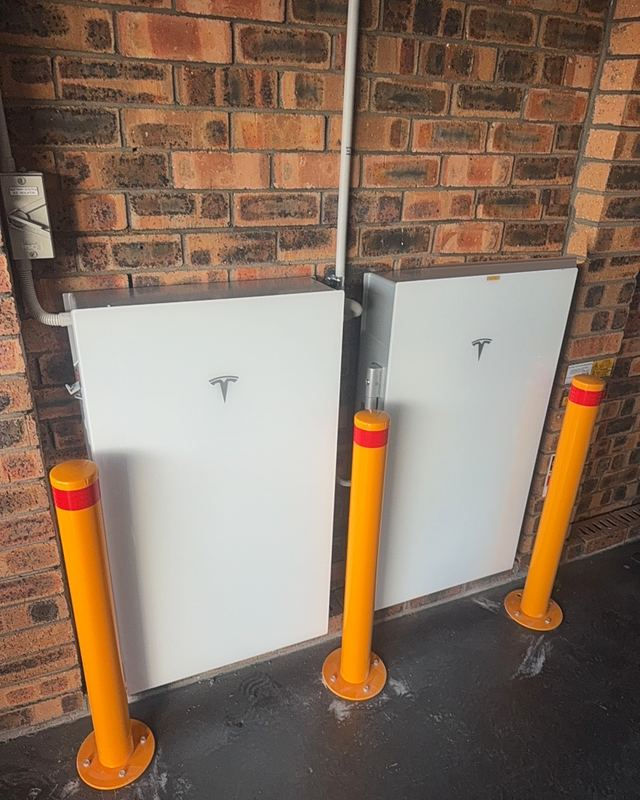
Battery size is measured in usable kilowatt-hours (kWh). A good starting point is how much power you use from late afternoon through to the next morning, when solar isn't covering your needs.
We also look at:
- Spare solar. A battery can only store what your panels have left over. A large battery on a small solar system may rarely fill, especially in winter.
- Power output. The battery needs enough power (kW) to run what's on at the same time, like cooking, heating or cooling in the evening.
- Backup. If you want blackout protection, we size for the circuits you want to keep running.
- Incentives. Federal battery STCs apply on usable capacity from 5 to 50 kWh, with the per-kWh amount reducing in steps above 14 kWh and 28 kWh. For 2026 installs, that's roughly $1,250 to $6,400 off depending on size.
A battery that's too big can cost more than it saves. One that's too small leaves you buying evening power from the grid. We aim for the balance that makes sense for your household.
Why a site visit matters
Bills and rules of thumb get us close, but the details are on site: the roof, shading, your switchboard, phases and where a battery can go. Our in-house team has completed more than 4,000 installs over 20+ years, and we size every system individually.
See our solar and battery storage pages, or request a free quote with a recent bill.
Frequently asked questions
Is it worth putting as many panels on my roof as possible?
Not always. Because feed-in tariffs are low, extra panels mostly earn export credits. That said, if you're planning a battery, EV or all-electric home, a bit of extra solar is often worthwhile. We'll talk through the trade-off.
What size battery do most homes get?
It varies widely. The right size depends on your evening and overnight use, your solar, and whether you want backup. We size from your bills rather than recommending a standard package.
Do I need three-phase power for a larger system?
Not necessarily, but your network sets limits on single-phase systems. Three-phase homes can often have larger inverters. We check this during the quote.
Can I add more later?
Usually. Many batteries are modular and solar can often be extended, but planning ahead keeps it simpler. See our guide to adding more panels.
Sources
- Solar for households: choosing system size (energy.gov.au)
- Cheaper Home Batteries Program eligibility information (DCCEEW)
- Solar batteries (Clean Energy Regulator)
Government programs and incentives change. Always check the official pages for the latest details.